Rural Texas
Waco Has an Ice Age Nursery, Preserved in Fossils
Waco Mammoth National Monument preserves evidence of a Columbian mammoth nursery herd, while ongoing research revises the story of how fossils were deposited.

Rights. Accountability. Awareness.
The record doesn’t blink.
Keep your eyes on Texas.
Old Texas Series | Guadalupe County
A Texas town named for a revolutionary, a nineteenth-century concrete legacy, the workers who built it and a giant pecan that became a local landmark.
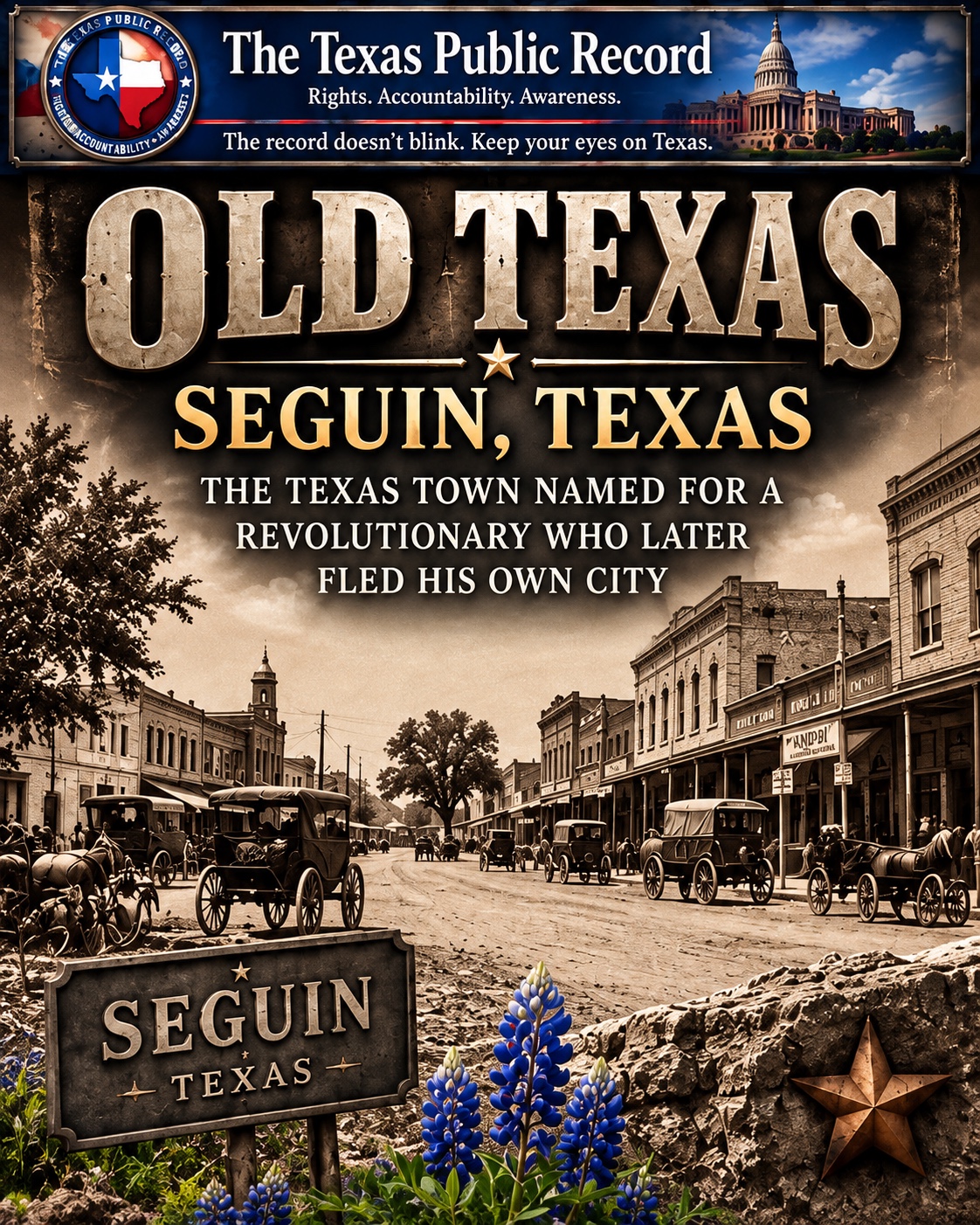
Before Seguin became the city Texans know today, it was Walnut Springs, a settlement established near the Guadalupe River in 1838.
Its name would change within a year. Its history would grow to include a Tejano revolutionary who became mayor of San Antonio, an unusual chapter in early concrete construction, enslaved workers whose contributions deserve recognition and a giant pecan that became one of the city’s most recognizable landmarks.
These seven images explore the people, places and events behind Seguin’s identity.
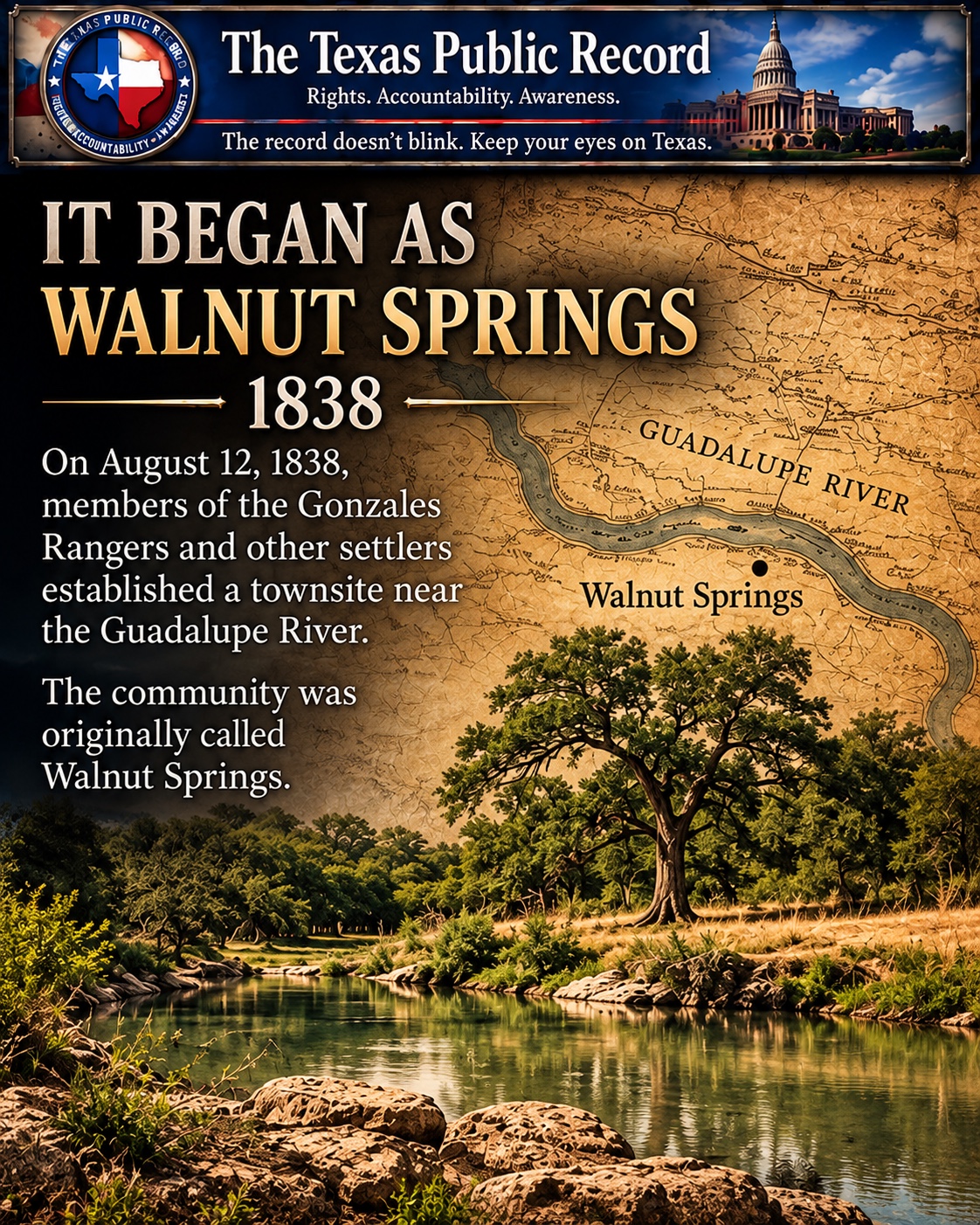
On August 12, 1838, members of the Gonzales Rangers and other settlers established the townsite of Walnut Springs near the Guadalupe River.
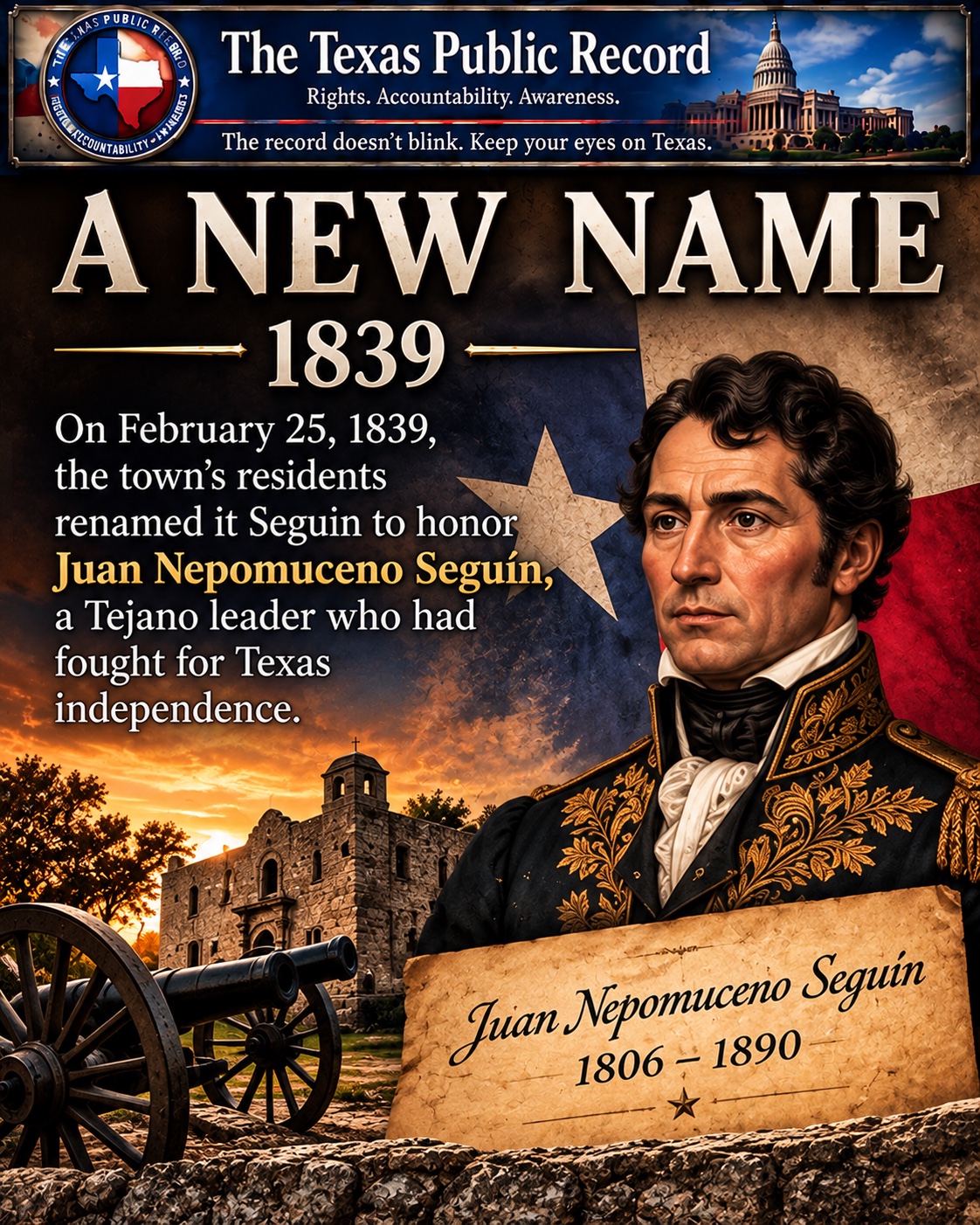
On February 25, 1839, the settlement was renamed Seguin in honor of Juan Nepomuceno Seguín, a Tejano leader who had helped fight for Texas independence.
Born in San Antonio in 1806, Seguín participated in the Texas Revolution, served as a courier during the Alamo campaign and commanded a Tejano company at the Battle of San Jacinto in 1836.
His contributions extended beyond military service.
In 1837, Seguín was elected to the Senate of the Republic of Texas. He chaired its Committee on Military Affairs and advocated making the republic’s laws available in Spanish.
He became mayor of San Antonio in late 1840 and was reelected in late 1841.
But the republic he helped establish was becoming increasingly hostile toward some of its Tejano residents.
Amid disputes involving property, finances and political allegiance, Seguín faced accusations and threats. On April 18, 1842, he resigned as mayor and fled to Mexico.
He subsequently served with Mexican military forces, maintaining that his service had been compelled. He later returned to Texas.
Seguín died in Nuevo Laredo, Mexico, in 1890. On July 4, 1976, his remains were reinterred in the city that had carried his name since 1839.
His story is a reminder that Texas independence involved Tejano leaders whose later experiences did not always reflect the recognition they had earned.
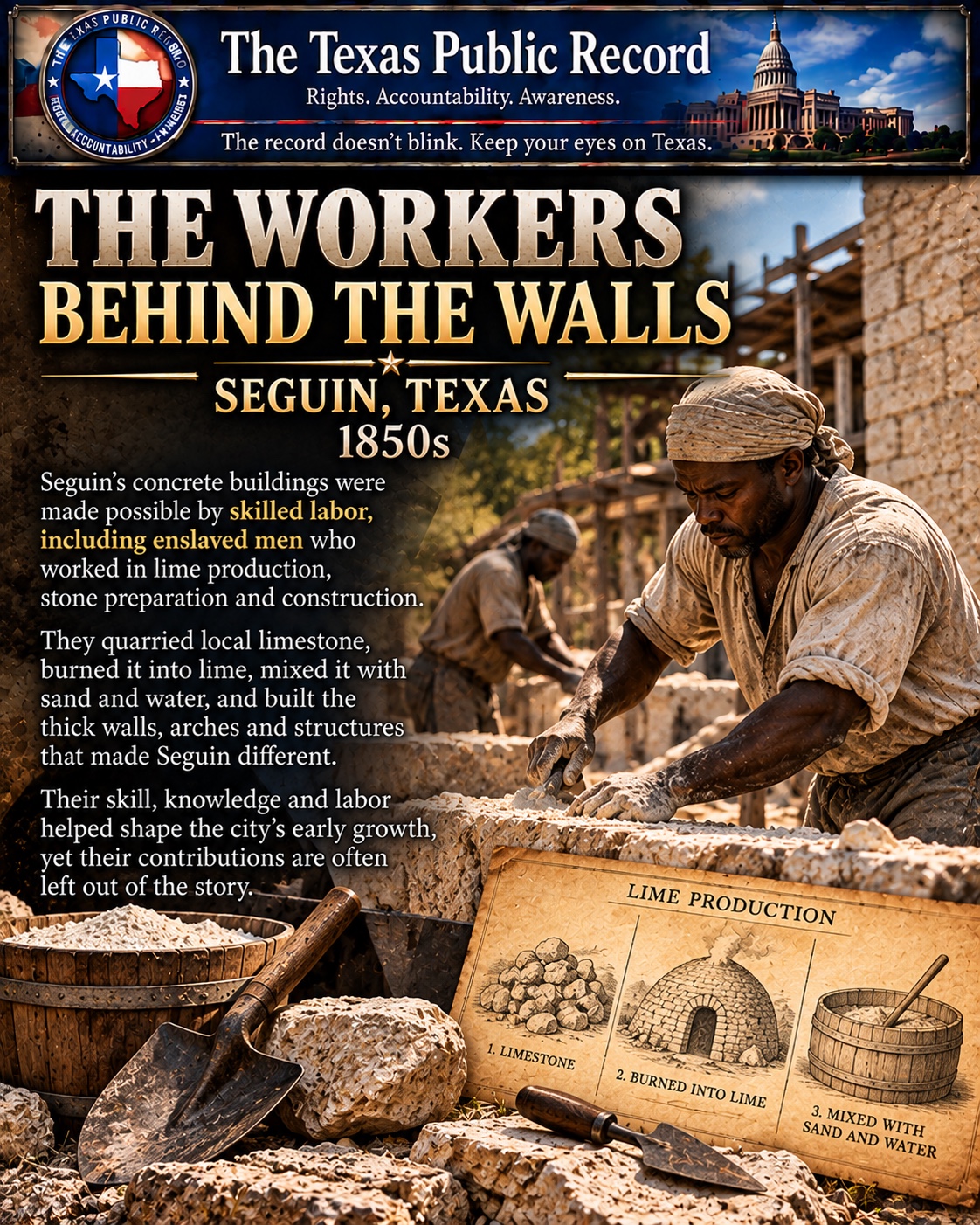
As Seguin developed during the nineteenth century, it became known for an unusual concentration of early concrete buildings.
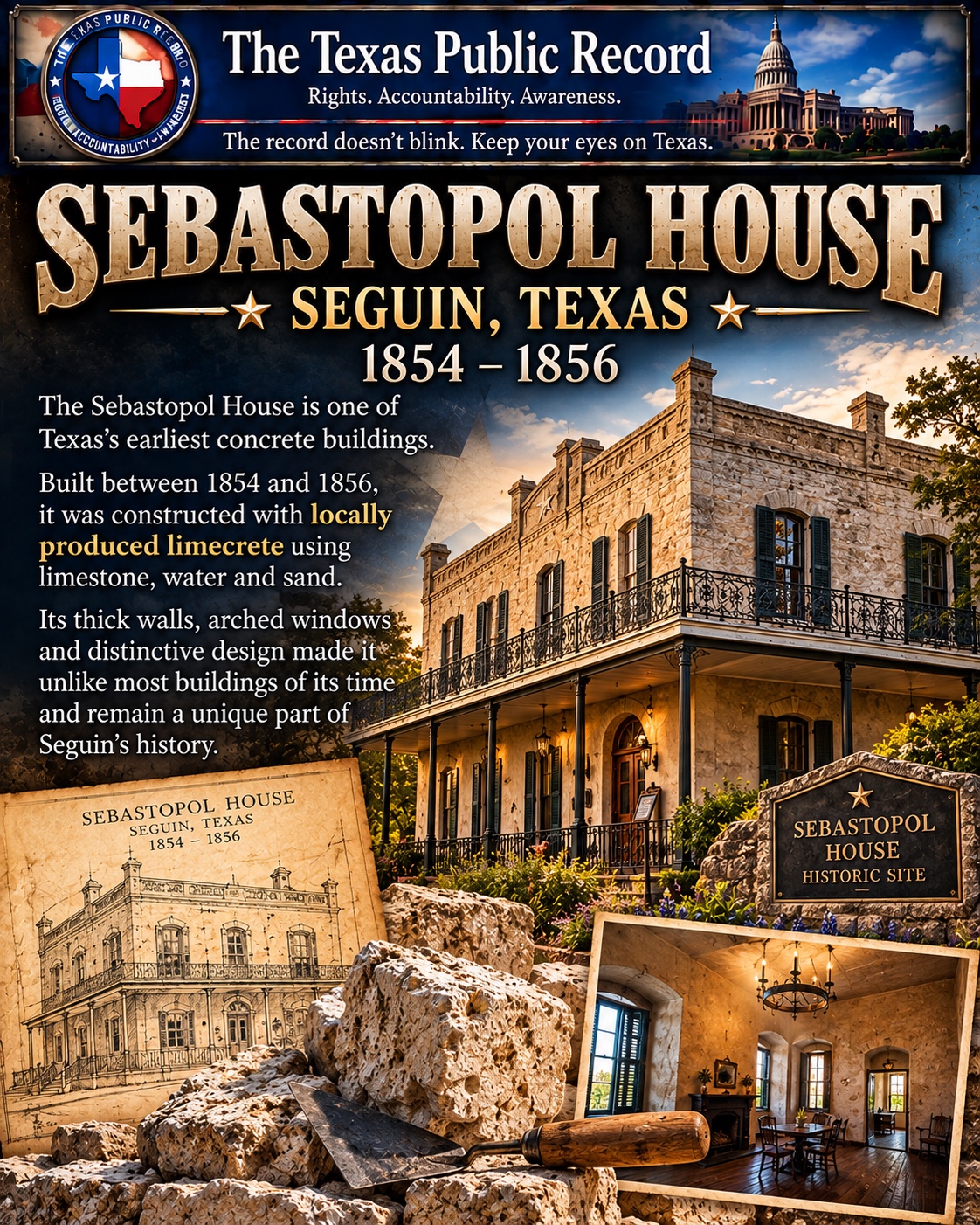
Locally produced limecrete, made using lime derived from limestone and mixed with sand, gravel and water, provided an alternative to conventional building materials.
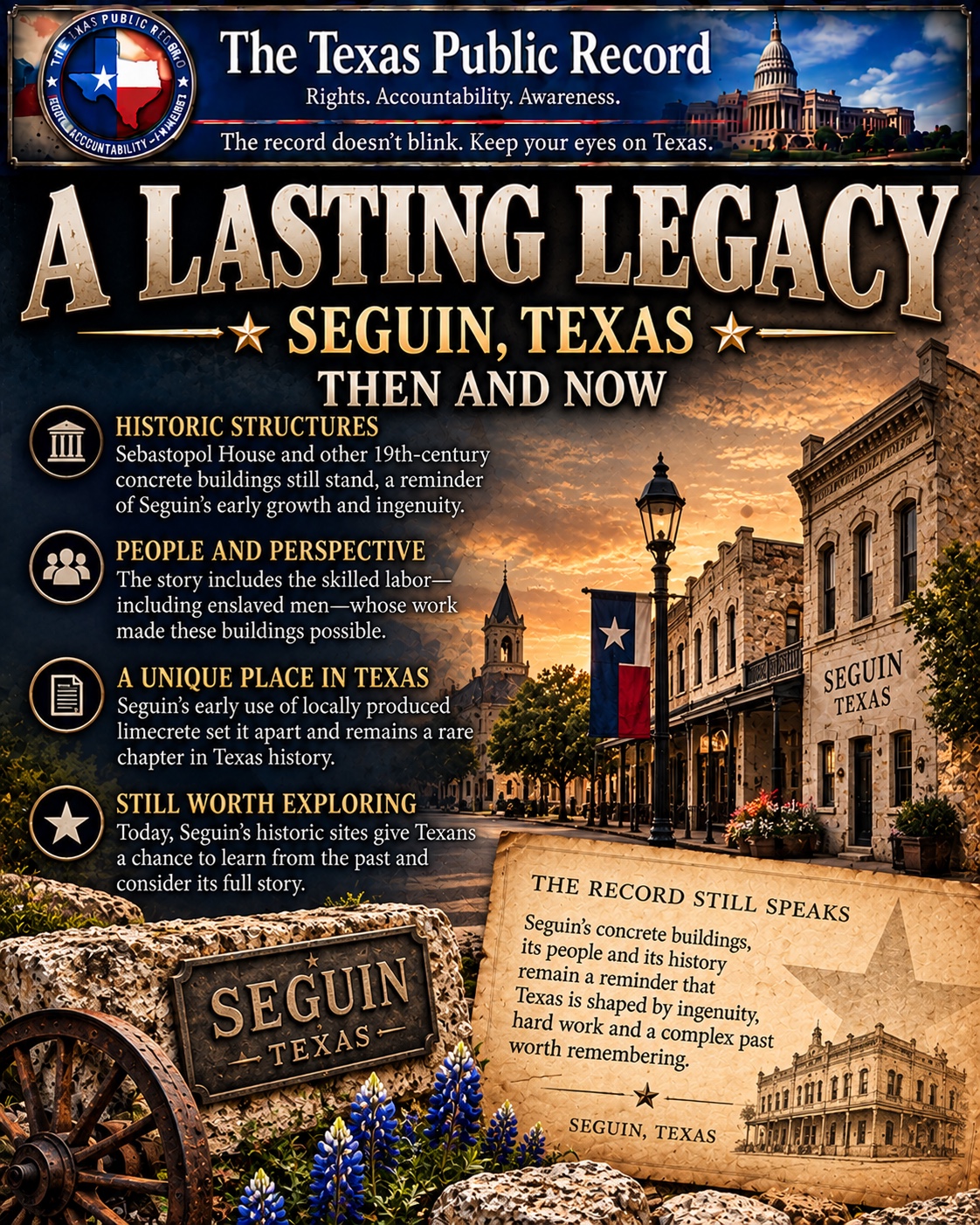
One surviving example is Sebastopol House, constructed between 1854 and 1856.
The building remains an important example of Seguin’s early architectural experimentation.
But the story of those structures cannot be separated from the people who built them.
Skilled workers, including enslaved men, contributed to lime production, material preparation and construction. Their labor helped make Seguin’s concrete-building tradition possible.
The buildings remain visible. The workers’ contributions must remain part of the history told about them.
Seguin’s historical identity also extends to its association with pecan trees and agriculture.
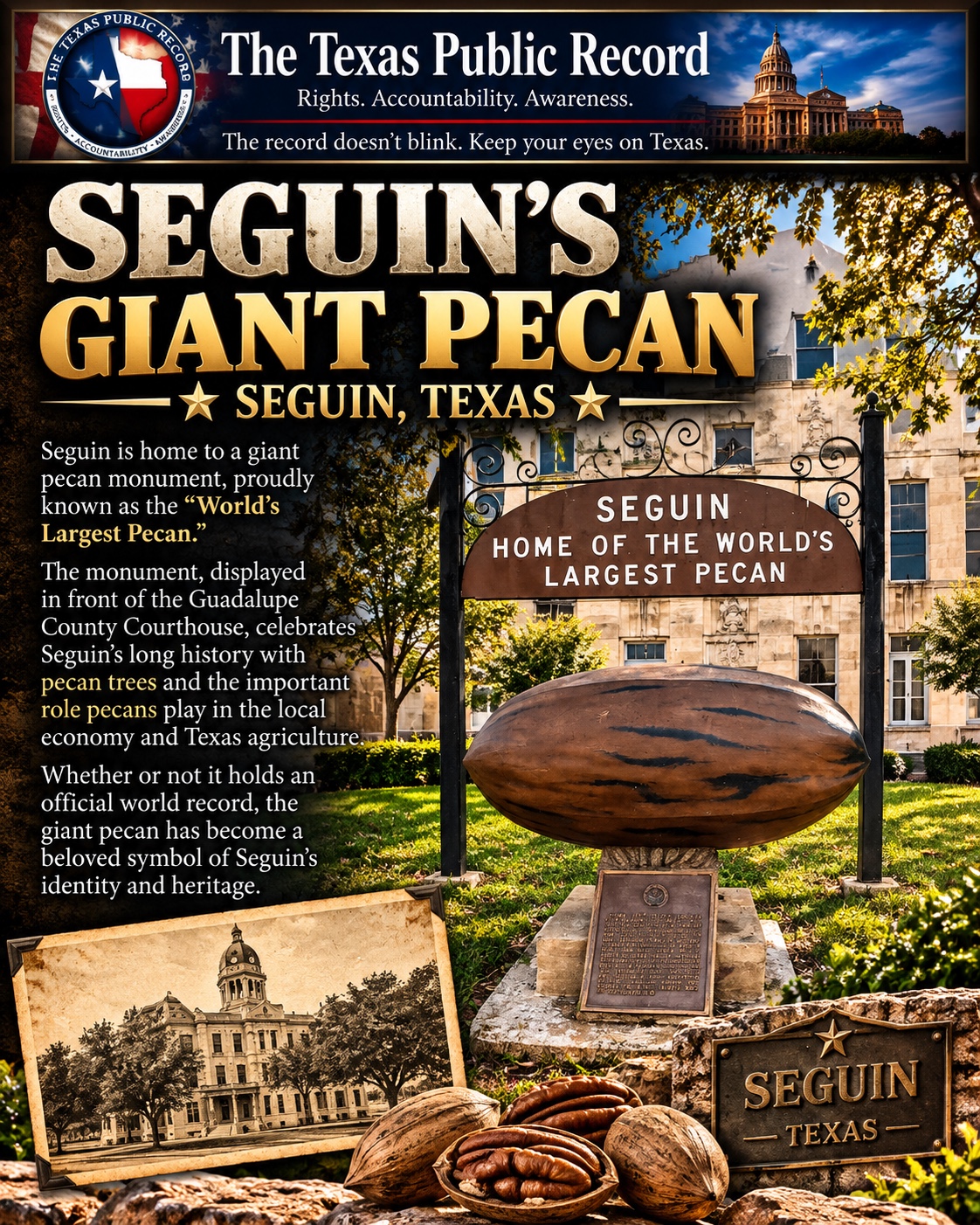
One of the city’s best-known landmarks is a giant pecan monument displayed outside the Guadalupe County Courthouse.
The oversized pecan sits beneath a sign identifying Seguin as the “Home of the World’s Largest Pecan.”
That wording reflects the landmark’s historical claim, not independent confirmation that it holds a current world record.
The monument is a constructed attraction, not an unusually large naturally grown pecan.
It has nevertheless become a recognizable symbol of Seguin and its pecan-growing heritage.
Seguin’s history is not contained in any single landmark.
It begins long before the modern city, includes the revolutionary whose name it carries and continues through the buildings, labor, agriculture and communities that shaped its development.
Sebastopol House offers a surviving example of early construction methods. The giant pecan preserves a local agricultural identity. The city’s name honors a Tejano leader whose military and political contributions were followed by exile and controversy.
Each represents a different chapter.
Together, they explain why preserving Texas history requires more than celebrating familiar names and monuments. It requires examining the records, recognizing the people behind the achievements and acknowledging the parts of the past that are more difficult to tell.
The buildings still stand. The name remains. The record preserves the fuller story.
These illustrations accompany the sourced history above. Depicted people, scenes, maps and building details are illustrative, not documentary evidence.
The Texas Public Record
Rights. Accountability. Awareness.
Rural Texas
Waco Mammoth National Monument preserves evidence of a Columbian mammoth nursery herd, while ongoing research revises the story of how fossils were deposited.
Rural Texas
The Guadalupe Mountains preserve the Capitan Reef, built in an ancient Permian sea and later exposed by uplift and erosion.
Rural Texas
An October 3 TAHC order revised Zone 13.C in portions of Brewster and Pecos counties after a canine detection. What animal owners need to know about movement requirements.